How Much Do CDL Truck Drivers Make in 2026?

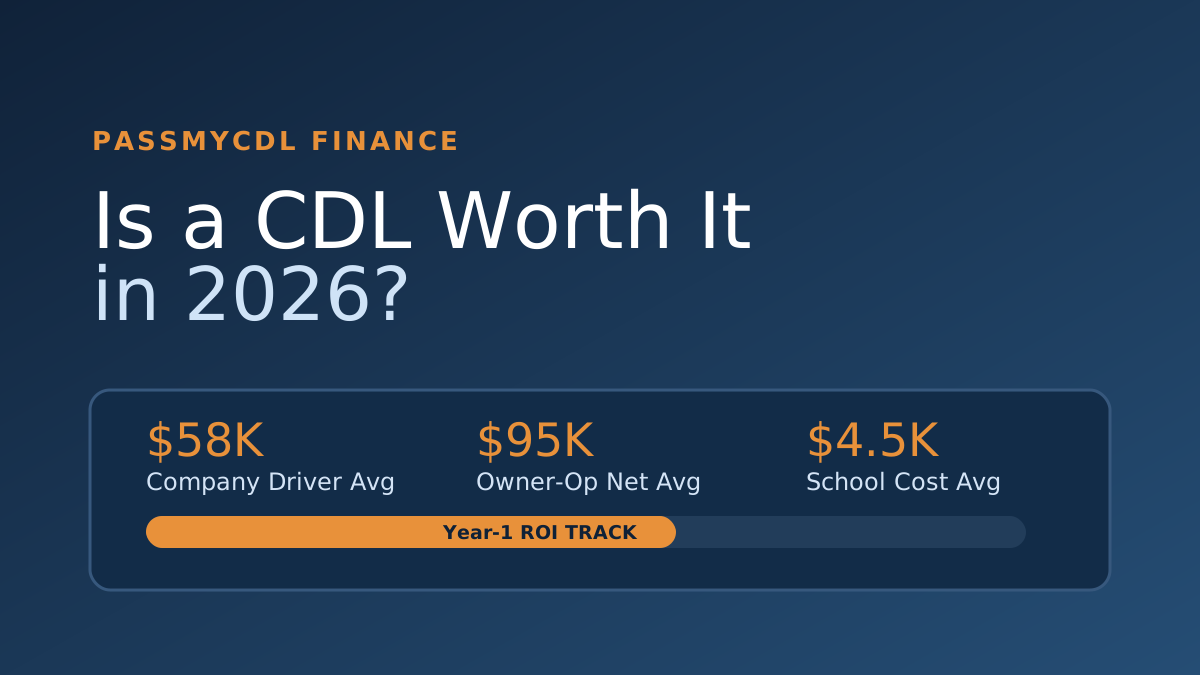
The honest answer is that truck driver pay varies more than almost any other skilled trade. A first-year OTR driver might earn $42,000. An experienced hazmat tanker specialist at the same company might earn $95,000. Both have a CDL. The difference is route type, endorsements, experience, and the specific freight they haul.
This guide gives you real 2026 salary data by job type, explains exactly how truck driver pay works, and includes a calculator so you can estimate what your actual earnings would look like based on your situation.
Why salary figures vary so much online: The BLS median ($57,440) includes all heavy truck driver roles — local delivery, short haul, and long haul combined. Job board averages ($73,000–$78,000) reflect posted positions which skew toward higher-paying OTR roles. Neither number is wrong — they measure different slices of the same industry.
Truck driver salary calculator — estimate your earnings
Select your situation below to see estimated annual earnings, monthly take-home, and projected 10-year income.
💵 CDL Salary Estimator
Based on 2026 market data from BLS, ZipRecruiter, and Glassdoor. Estimates only — actual pay varies by carrier and location.
Estimates based on 2026 market data. Does not include per diem, bonuses, or benefits. Owner-operator earnings not shown — see section below.
How truck driver pay actually works
Most people assume truck drivers are paid an annual salary like an office job. Most are not. The majority of OTR and regional drivers are paid by the mile — a system called CPM (cents per mile). Understanding CPM is essential to evaluating any trucking job offer.
📐 How CPM Pay Works — Real Math
Typical CPM rates in 2026:
- Entry-level company driver: $0.50–$0.60 CPM
- Experienced company driver (3–5 years): $0.60–$0.72 CPM
- Specialized freight (hazmat, tanker): $0.70–$0.90 CPM
- Team driving (two drivers, one truck): $0.60–$0.80 CPM each but more miles = higher total
The CPM number alone is not the full picture. Miles driven per week matters just as much. A driver earning $0.65 CPM doing 2,000 miles/week earns $67,600/year. A driver earning $0.60 CPM doing 2,800 miles/week earns $87,360/year. Fewer miles at a higher rate can still mean less money than more miles at a lower rate.
When evaluating a trucking job offer: Always ask for CPM rate AND guaranteed weekly miles. Multiply them yourself. Some carriers advertise high CPM rates but keep drivers idle with low mileage weeks. The annual earnings number is what you should negotiate, not the CPM alone.
Salary by job type — full 2026 breakdown
Route type is the single biggest factor in truck driver pay. Here is the real picture for each category.
| Job type | Annual salary range | Home time | Pay structure | CDL class needed |
|---|---|---|---|---|
| OTR (over-the-road) | $55,000–$85,000 | Home 1–2x per month | CPM, $0.55–$0.75 | Class A |
| Regional | $55,000–$75,000 | Home weekly or most weekends | CPM or hourly | Class A |
| Local delivery | $48,000–$68,000 | Home daily | Hourly, $23–$33/hr | Class A or B |
| Dedicated route | $55,000–$75,000 | Home regularly (route-dependent) | CPM or salary | Class A |
| Hazmat tanker (fuel) | $70,000–$110,000+ | Regional — often home regularly | CPM, $0.70–$0.90 | Class A + X endorsement |
| Flatbed / specialized | $65,000–$95,000 | OTR schedule | CPM or percentage of load | Class A |
| City transit bus | $45,000–$65,000 | Home daily | Hourly, $22–$32/hr | Class B + P endorsement |
| School bus | $35,000–$52,000 | Home daily, seasonal | Hourly, $18–$26/hr | Class B + S + P endorsement |
| Team driving (OTR) | $65,000–$90,000 each | Away for longer stretches | CPM split between both drivers | Class A |
How endorsements increase your pay
Endorsements are one of the fastest ways to increase your earnings after getting your CDL. Each endorsement expands the types of loads you can legally haul — and carriers pay a premium for drivers who can handle specialized freight.
| Endorsement | Avg pay increase | Why carriers pay more | Cost to get |
|---|---|---|---|
| Hazmat (H) | +$3,000–$8,000/yr | Fewer drivers qualified — higher demand, premium loads | ~$120–$150 (TSA + state fees) |
| Tanker (N) | +$2,000–$5,000/yr | Liquid cargo requires special skills — safety premium | $5–$30 (knowledge test only) |
| Hazmat + Tanker (X) | +$8,000–$20,000/yr | Opens fuel hauling and chemical transport — highest-demand combination | ~$130–$180 total |
| Air Brakes (restriction removal) | +$1,000–$3,000/yr | Required for most Class A vehicles — without it, employers have to find trucks without air brakes | $0–$30 (knowledge test) |
| Doubles/Triples (T) | +$1,000–$3,000/yr | Less-than-truckload carriers pay premium for T endorsement | $5–$20 (knowledge test) |
The math on endorsements is compelling. The X endorsement (hazmat + tanker) costs under $200 to obtain. The pay increase is $8,000 to $20,000 per year. That is a return on investment measured in days, not years. If you are planning to get your CDL, study for air brakes and tanker at the same time as your general knowledge test and take all tests in one DMV visit. It costs almost nothing extra and immediately puts you in a higher-earning driver category.
Learn more about the hazmat endorsement and tanker endorsement — both guides cover exactly what is on each test and how to pass first try.
Pay by experience — the career progression
Truck driver pay increases significantly with experience, but not at a fixed rate. The biggest jumps happen in years 1 through 5 — after that, pay growth slows unless you move into specialized freight or owner-operator status.
-
0First year — company OTR driver$40,000–$55,000
Entry-level pay while building your safety record. Many carriers restrict new drivers to certain lanes or equipment types. CPM rates start at $0.50–$0.58. This year is about accumulating miles and proving reliability — it directly determines your starting rate at your next carrier.
-
1Years 1–3 — developing driver$50,000–$65,000
With 1–2 years of clean driving history, you qualify for better carriers and better lanes. This is when endorsements start paying off most. Add hazmat and tanker, move to a carrier that pays for them, and you can jump $8,000–$15,000 per year in this window.
-
3Years 3–7 — experienced driver$60,000–$80,000
Three years of clean record opens the highest-paying company driver positions. Fuel hauling, chemical tanker, and dedicated high-value freight all become accessible. This is where drivers who chose specialized routes start significantly outearning general freight drivers.
-
7Years 7–15 — senior driver$70,000–$95,000
Top-tier company driver pay range. Drivers with clean records, multiple endorsements, and specialized experience command the best CPM rates. Many drivers in this range also have dedicated routes with consistent home time — the best of both worlds.
-
15Owner-operator or fleet owner$100,000–$200,000+ gross
Owner-operators gross significantly more but absorb all operating costs: fuel, truck payment, insurance, maintenance, and taxes. Net income after expenses is typically $60,000–$150,000 — better than company driver for disciplined operators, but the financial risk is entirely personal.
The owner-operator reality — gross vs net
Owner-operator income looks impressive in headlines. "$200,000 a year" gets attention. What those headlines almost never show is the expense side of the equation.
| Item | Annual cost estimate | Notes |
|---|---|---|
| Gross revenue | $150,000–$250,000 | Depends on miles, lanes, and freight rates |
| Fuel | $40,000–$70,000 | Largest single expense — varies with diesel prices |
| Truck payment / depreciation | $15,000–$40,000 | Depends on truck age and purchase vs lease |
| Insurance | $12,000–$20,000 | Commercial trucking insurance is expensive — liability, cargo, physical damage |
| Maintenance and repairs | $8,000–$20,000 | Unpredictable — engine and drivetrain repairs can be $15,000+ in one event |
| Self-employment taxes | $10,000–$18,000 | 15.3% self-employment tax on top of income tax |
| Net income | $60,000–$150,000 | After all expenses and taxes |
Before going owner-operator: Most experienced trucking advisors recommend at least 3 to 5 years as a company driver first. You need to know the industry's rhythms, freight rate cycles, and how to spot a bad load before absorbing all the financial risk yourself. Company driving is not a consolation prize — it is where the industry knowledge that makes owner-operators successful actually gets built.
Salary by state — where pay is highest
State-level pay differences are real but often overstated. The higher-paying states also tend to have higher costs of living. Here are the real numbers alongside context.
| State | Avg annual salary | Why it pays more | COL factor |
|---|---|---|---|
| North Dakota | $78,000+ | Oil field hauling, hazmat premium loads | Moderate — good purchasing power |
| Illinois | $73,000+ | Major freight corridor, high union density | Moderate — varies by region |
| Washington | $65,000+ | Port freight, high union wages | High — Seattle area expensive |
| Alaska | $70,000+ | Remote supply chain premium, harsh conditions pay | Very high — remote costs |
| Wyoming | $70,000+ | Energy sector, long-haul through state | Low-moderate — good purchasing power |
| New York | $62,000+ | High union wages, dense freight network | Very high — NYC area offsets wages |
| Texas | $58,000+ | Massive freight volume, oil patch hauling | Low-moderate — strong purchasing power |
| Mississippi | $48,000+ | Lower freight demand, lower COL | Very low — dollars go far |
Real talk on state salaries: A $78,000 average in North Dakota and a $65,000 average in Washington are not as different as they look after cost of living. Texas at $58,000 average may offer better actual purchasing power than New York at $62,000. Always look at cost-of-living adjusted salaries, not just headline numbers, when comparing states.
What actually determines your pay — the real factors
After reading salary tables, most people want to know: what can I actually control? Here is what moves the needle most, in order of impact.
- Clean driving record — the single most important factor after route type. Accidents and violations cut your CPM rate by $0.02–$0.08 and close the door at better-paying carriers entirely.
- Endorsements — air brakes, hazmat, and tanker together cost under $200 and open the highest-paying freight categories. The pay premium on endorsements is one of the best returns on investment in any trade.
- Route type — OTR pays more than local, specialized pays more than general freight. The tradeoff is home time. Only you can decide what that tradeoff is worth.
- Carrier choice — pay varies enormously between carriers on the same route type. Research carrier ratings, actual CPM, and weekly guaranteed miles before signing. Trucker forums and job boards show what real drivers earn at specific carriers.
- Miles efficiency — experienced drivers squeeze more miles into the same hours-of-service window by planning routes, reducing detention time, and choosing freight with faster load/unload cycles.
- Retention — drivers who stay at one carrier for 3+ years typically receive loyalty pay increases, better route access, and first priority on the highest-paying loads. Job hopping sacrifices these compounding benefits.
How does truck driver pay compare to other trades?
CDL driving competes directly with other skilled trades for workers. Here is how the pay stacks up against similar roles that require comparable training time and certification.
| Career | Training time | Training cost | Starting pay | Experienced pay |
|---|---|---|---|---|
| CDL truck driver (Class A) | 3–8 weeks | $0–$8,000 | $40,000–$55,000 | $65,000–$95,000 |
| Electrician (apprentice) | 4–5 years | $0 (earn while training) | $35,000–$45,000 | $65,000–$90,000 |
| Plumber (journeyman) | 4–5 years | $0 (earn while training) | $38,000–$48,000 | $60,000–$85,000 |
| HVAC technician | 6 months–2 years | $1,000–$15,000 | $35,000–$50,000 | $55,000–$75,000 |
| Welding (certified) | 6 months–2 years | $3,000–$15,000 | $35,000–$50,000 | $55,000–$80,000 |
| Registered Nurse (RN) | 2–4 years | $20,000–$80,000 | $55,000–$70,000 | $70,000–$95,000 |
CDL driving compares favorably on the combination of short training time, low upfront cost, and strong starting pay. An electrician takes 4 years of apprenticeship to reach the same pay a CDL driver can hit in 2 to 3 years. The tradeoff is the lifestyle — trucking involves time away from home that most trades do not require.
For more on whether the CDL is a good financial investment overall, read the full Is a CDL Worth It? analysis — it covers the full financial picture including payback period and long-term earnings.
Ready to start studying for your CDL?
The path to the higher-paying driver positions starts with passing the CDL knowledge test and getting your endorsements right. PassMyCDL's free lessons and endorsement packs are built on the FMCSA manual — use them before your DMV visit to pass first try.
Truck Driver Salary FAQ
How much do CDL truck drivers make in 2026?
The BLS median for heavy truck drivers is $57,440. Most experienced Class A OTR drivers earn $65,000–$85,000. Specialized drivers (hazmat tanker, fuel) earn $80,000–$110,000+. First-year drivers typically earn $40,000–$55,000. Pay varies significantly by route type, endorsements, experience, and state.
What is the highest paying CDL truck driving job?
Hazmat tanker specialist ($80,000–$110,000+), oversized load hauler ($75,000–$100,000), and team OTR driving ($65,000–$90,000 each) are the highest-paying company driver positions. Owner-operators gross $150,000–$300,000 but net $60,000–$150,000 after fuel, truck, insurance, and taxes.
What is CPM pay for truck drivers?
CPM (cents per mile) is how most OTR drivers are paid. Entry level is $0.50–$0.60 CPM. Experienced drivers earn $0.62–$0.75 CPM. Specialized freight pays $0.75–$0.90 CPM. At $0.62 CPM and 2,500 miles/week, annual earnings are about $80,600. Always evaluate CPM alongside guaranteed weekly miles.
Do endorsements increase truck driver pay?
Yes significantly. The X endorsement (hazmat + tanker) adds $8,000–$20,000 per year for experienced drivers and costs under $200 to obtain. Air brakes, tanker alone, and doubles/triples each add smaller premiums. Endorsements are one of the best return-on-investment career moves available to CDL holders.
Which states pay CDL truck drivers the most?
North Dakota ($78,000+ average), Illinois ($73,000+), Alaska ($70,000+), Wyoming ($70,000+), and Washington ($65,000+) are the highest-paying states. However, cost of living matters — high-paying states like New York and Washington also have much higher living costs. Texas and Wyoming often offer better purchasing power despite lower headline salaries.
Start building toward the higher-paying CDL positions
Air brakes, hazmat, and tanker endorsements are what separate the $55K driver from the $85K driver. PassMyCDL's endorsement packs cover every topic on each test. Use them to pass first try and start in the right pay bracket from day one.
View Endorsement Course Packs →