CDL Hazmat Endorsement Study Guide: Pass the H Test First Try
The CDL hazmat endorsement is the most complex written test in the CDL system. The general knowledge test has 50 questions. The hazmat test has 30 — but those 30 questions cover more rules, more specific details, and more federal regulations than any other CDL test section. That is why drivers who take it without proper preparation often fail on their first attempt.
This guide covers everything you need to pass: the nine hazmat classes, placard rules, shipping paper requirements, loading restrictions, emergency procedures, special driving rules, the TSA background check process, and exactly how to study so the test feels familiar before you walk in.
Quick facts about the hazmat endorsement: 30-question test · need 24 correct (80%) to pass · requires TSA background check before testing · costs $86.50 federal fee plus state fees · takes 30–60 days total from start to finish · must renew with each CDL renewal.
Why get the hazmat endorsement?
Hazmat drivers earn significantly more than standard CDL drivers. The endorsement opens fuel hauling, chemical transport, and specialized cargo jobs that are simply unavailable without it. Many carriers pay a hazmat premium on every load — not just loads that actually contain hazardous materials — because the certification demonstrates a higher level of knowledge and trustworthiness.
The hazmat endorsement is also one of the fastest ways to increase your pay without changing employers. Once you have a CDL, adding the H endorsement costs under $200 and requires only the written test and TSA process — no additional skills test or driving evaluation.
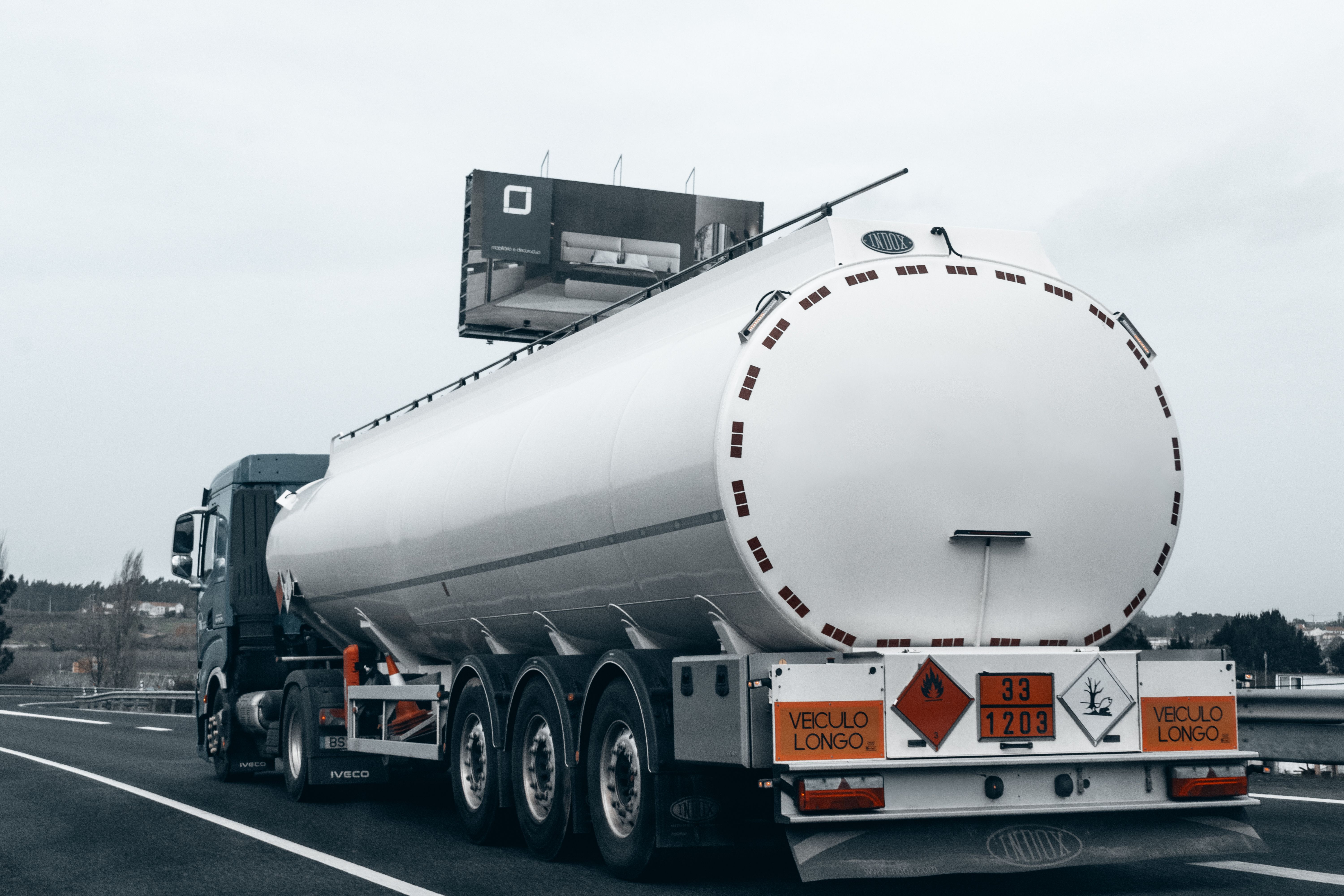
The X endorsement — which combines hazmat (H) and tanker (N) — is what fuel hauling jobs require. If you want to drive fuel trucks, you need both. See the Tanker Pack for tanker endorsement prep alongside this guide.
The TSA background check — start here first
Most people study for the hazmat test first and worry about the TSA process later. That is the wrong order. The TSA background check takes 30 to 60 days. The written test takes one afternoon. Start the TSA process immediately — ideally while you are still in CDL school — so that by the time you are ready to take the written test, TSA approval is already waiting for you.
-
1Submit your application onlineDay 1 — 30 minutes
Go to universalenroll.com (the official TSA enrollment portal). Create an account, fill out your personal information, and pay the $86.50 federal fee. You will also select an enrollment center near you for fingerprinting.
-
2Visit a TSA enrollment center for fingerprintingWithin 1–2 weeks of application
Bring your government-issued ID (driver's license or passport) and your application confirmation. The center takes your fingerprints digitally. The appointment takes about 15 minutes. Enrollment centers are often found at UPS stores, pharmacies, and government offices — the portal shows locations near your zip code.
-
3TSA conducts the threat assessment2 to 8 weeks after fingerprinting
TSA runs a background check including criminal history, immigration status, and security threat databases. You cannot speed this up. Most approvals come back in 2 to 4 weeks. You will receive an email when the decision is made.
-
4Receive approval and take the knowledge testAfter TSA approval — same day possible
Once approved, visit your state DMV with your TSA approval documentation. Take the 30-question hazmat knowledge test. If you have been studying during the wait period, you walk in prepared. Pass with 24 or more correct answers and the H endorsement is added to your CDL.
-
5CDL updated with H endorsementSame day or mailed within 2 weeks
Your state DMV updates your CDL with the H endorsement. Some states print a temporary license the same day. Others mail the updated card. You can legally transport hazmat once the endorsement is on your license.
Can TSA deny your application? Yes. Disqualifying factors include certain felony convictions, mental health adjudications, and immigration status issues. If denied, you have the right to appeal and correct any record errors. Full disqualifying criteria are listed at the TSA hazmat program page at tsa.gov.
What the hazmat knowledge test actually covers
The 30-question hazmat test draws from eight topic areas. Understanding which areas get the most questions helps you focus your study time where it matters most.
Placards and shipping papers together account for roughly half of all test questions. If you master those two areas alone, you are most of the way to passing. The other sections add the remaining points.
The 9 hazmat classes — tap each to learn more
Every hazardous material belongs to one of nine classes. The test expects you to know what each class covers, recognize common examples, and understand the special handling requirements for each. Tap any class card below for a detailed breakdown.
Placard rules — the most tested hazmat topic
Placards are the diamond-shaped warning signs on the outside of vehicles carrying hazardous materials. The test asks you to know which materials require which placards, when placards are required by weight, and placement rules.
| Rule | Detail | Why it matters on the test |
|---|---|---|
| Any quantity rule | Classes 1.1, 1.2, 1.3, 2.3, 6.1 (poison inhalation hazard), 7 (radioactive), and materials meeting Hazardous Substance criteria require placards regardless of quantity | Test asks "which classes require placards in any amount?" |
| 1,001 pound rule | Most other hazmat classes require placards when the total weight of that class exceeds 1,001 pounds in one vehicle | Test gives you a weight and asks if placards are required |
| Placard placement | Must be on all four sides of the vehicle — front, rear, and both sides. Must be visible and readable from 25 feet in daylight. | Test asks how many placard locations are required |
| Placard condition | Must not be damaged, dirty, or obscured. If a placard becomes damaged during transport, it must be replaced at the next stop | Test scenario: damaged placard — what do you do? |
| Multiple hazards | If a vehicle carries materials from multiple hazmat classes requiring different placards, all required placards must be displayed | Test may give a mixed load and ask which placards are needed |
Shipping papers — what you must check and carry
Shipping papers are documents that travel with every hazmat load. They tell emergency responders what is in the truck if something goes wrong. The driver is legally responsible for verifying the shipping papers are accurate before driving.
The test focuses on three things about shipping papers:
- Where to keep them: Within reach while driving — in the door pouch on the driver's door or on the driver's seat. When out of the vehicle, papers must be on the driver's seat or in a pouch visible from outside the cab.
- What they must contain: Proper shipping name, hazard class, UN or NA identification number, packing group (if applicable), and total quantity. If a material is a poison inhalation hazard, the shipping paper must say "Poison Inhalation Hazard" or "Inhalation Hazard."
- What the driver must verify: That the hazmat description on the shipping papers matches the labels on the packages, and that the packages are not leaking or damaged before loading.
Shipping paper memory tip: Think of shipping papers as the first thing emergency responders grab. They need to know: WHAT is it? HOW dangerous? HOW MUCH? WHERE exactly? That maps directly to: proper shipping name → hazard class → quantity → location in the vehicle. Every test question about shipping papers traces back to those four answers.
Loading and unloading rules
The loading section of the hazmat test covers which materials cannot be loaded together and what the driver must do before, during, and after loading.
- Do not load together: Poisons with food or feed. Corrosives below food items. Oxidizers away from flammable materials. Class 1 explosives away from detonators unless specially approved.
- Inspect before loading: Check packages for leaks, tears, or damage. Do not accept damaged packages. Verify labels match shipping papers.
- Secure the load: Packages must be secured so they cannot shift during normal driving. Cylinders of gas must be secured upright unless designed to be transported on their side.
- Engine rules: Turn the engine off when loading flammable liquids. Stay within 25 feet of the vehicle. Do not smoke within 25 feet of the vehicle during loading or unloading.
- Blocking and bracing: Freight must not contact hazmat packages directly unless the outer packaging is designed for it.
Special driving and parking rules for hazmat
These rules are heavily tested because they are specific to hazmat and differ from standard CDL driving rules.
| Rule | Hazmat requirement |
|---|---|
| Railroad crossings | Must stop 15 to 50 feet before the nearest rail. Look and listen. Do not shift gears while crossing. This applies to ALL placarded hazmat loads — not just explosives. |
| Tunnels and bridges | Some tunnels prohibit certain hazmat loads. Always check local restrictions before routing through tunnels. Many major tunnels in the US prohibit Class 1 explosives and Class 2.3 gases. |
| Parking restrictions | Cannot park within 5 feet of the traveled portion of a road. Cannot park within 300 feet of a bridge, tunnel, or building unless necessary for operations. Never park in a tunnel. |
| Attended vehicle rule | A placarded hazmat vehicle must be attended at all times or parked in a secure area. "Attended" means the driver is in the cab or within 100 feet with a clear view of the vehicle. |
| Tire check frequency | Must check tires at every stop, or every 2 hours or 100 miles — whichever comes first. A hot tire on a hazmat load is a fire risk. |
| Emergency Response Guidebook | Must carry a current DOT Emergency Response Guidebook (ERG) in the cab at all times when transporting hazmat. First responders use this to identify hazards at accident scenes. |
Emergency response procedures
The test asks what to do when something goes wrong with a hazmat load. The answers follow a clear priority order: safety first, notification second, documentation third.
- If you discover a leak or spill: Move away from the vehicle, keep others away, call 911 and your carrier, and do not attempt to fix the leak yourself unless you have been specifically trained and equipped to do so.
- Keep shipping papers accessible: Emergency responders need the shipping papers immediately. Never move them to a location that makes them hard to find.
- Do not eat, drink, or smoke near a hazmat spill or when handling packages.
- Report any incident involving hazmat to the National Response Center at 1-800-424-8802. Federal law requires this for any release of hazardous materials.
- Use the ERG: The Emergency Response Guidebook tells you initial isolation distances, protective action distances, and first aid measures for every hazmat class.
Security plan requirements
This section catches many test takers off guard because most study guides cover it only briefly. Since 2003, carriers transporting certain hazmat quantities are required by federal law to have a written security plan. The test asks you to know what a security plan must include and what the driver's responsibilities are.
A hazmat security plan must address:
- Personnel security — background checks and training for employees handling hazmat
- Unauthorized access prevention — how the carrier prevents non-authorized people from accessing hazmat
- En-route security — procedures for monitoring the load and reporting suspicious activity
The driver's job in the security plan is to follow it, report security concerns to the carrier, and not discuss the contents of the load publicly. You are not responsible for writing the plan — just for knowing it exists and following it.
Ready to study with structured lessons?
The PassMyCDL Hazmat Pack covers all 9 hazmat classes, placard rules, shipping paper requirements, and the TSA process across 16 organized video lessons. Structured prep is faster than reading the manual alone.
Practice quiz — test yourself before your DMV visit
These 8 questions cover the topics most commonly tested on the hazmat endorsement exam. Try to answer each before checking the explanation.
🧪 Hazmat Knowledge Quiz
8 questions · sourced from FMCSA CDL manual topics · tap an answer to check it
How to study for the hazmat test — the right way
Most people read the hazmat chapter of the CDL manual once and assume they are ready. The hazmat test is the one section where that approach most commonly fails. Here is a better method:
- Start the TSA process on day one — do not wait until you have finished studying. The 30–60 day wait is fixed. Use it to study.
- Learn the 9 classes and their examples first — before any rules, just know which materials belong to which class. Quiz yourself until you can name the class from the material or the material from the class.
- Study placards as a separate session — the placard rules have specific numbers and thresholds. Write out the 1,001-pound rule and the any-quantity classes from memory until they stick.
- Memorize the railroad crossing rule exactly — 15 to 50 feet, look and listen, do not shift gears while crossing. This comes up in multiple question forms.
- Read the shipping papers section twice — once for what papers contain, once for where they must be kept. These are the most-tested details.
- Do practice questions only after covering the material — jumping straight to practice tests without understanding the content leads to memorizing answers instead of understanding rules. That fails you on questions worded differently.
Hazmat Endorsement FAQ
How many questions are on the CDL hazmat test?
The hazmat endorsement knowledge test has 30 questions in most states. You need 24 correct answers — an 80% passing score — to pass. The test is taken at your state DMV after TSA background check approval.
How long does the TSA background check take?
The TSA background check typically takes 30 to 60 days. Start the process early — ideally while still in CDL school — so you are not waiting after graduation. Submit your application at universalenroll.com.
How much does the hazmat endorsement cost?
The TSA background check costs $86.50 (federal fee, non-negotiable). Add your state's endorsement fee — typically $5 to $50. Total cost is usually $100 to $150. See our CDL cost breakdown for a full overview.
How often must you renew the hazmat endorsement?
The hazmat endorsement renews with your CDL — typically every 4 to 5 years depending on your state. Each renewal requires a new TSA background check and fingerprinting. Budget the renewal time into your schedule the same way you did the initial application.
What does the CDL hazmat test cover?
The test covers nine hazard classes, placard requirements, shipping papers, loading and unloading rules, driving and parking restrictions, emergency response procedures, and security plan requirements. Placards and shipping papers make up roughly half of all questions.
Ready to get the hazmat endorsement?
The PassMyCDL Hazmat Pack covers all 9 classes, placards, shipping papers, and the full TSA process in 16 structured video lessons — plus a 50-question practice exam built from the exact topics the test covers.
Get the Hazmat Pack — $79 →