Class A vs Class B CDL: What Is the Difference?
The difference between a Class A and Class B CDL comes down to one thing: whether you are driving a combination vehicle or a single vehicle. Class A covers tractor-trailers and combination rigs. Class B covers heavy straight trucks, buses, and large delivery vehicles. That single distinction changes which jobs you can take, how much you can earn, and how long your training takes.
This article breaks down every meaningful difference between the two classes — vehicles, weight rules, knowledge tests, pay, jobs, and how to decide which one is right for your situation.
Quick answer: If you want to drive tractor-trailers or 18-wheelers, you need a Class A CDL. If you want to drive straight trucks, buses, or large delivery vehicles without a heavy trailer, a Class B CDL is enough — and faster to get.
What is a Class A CDL?
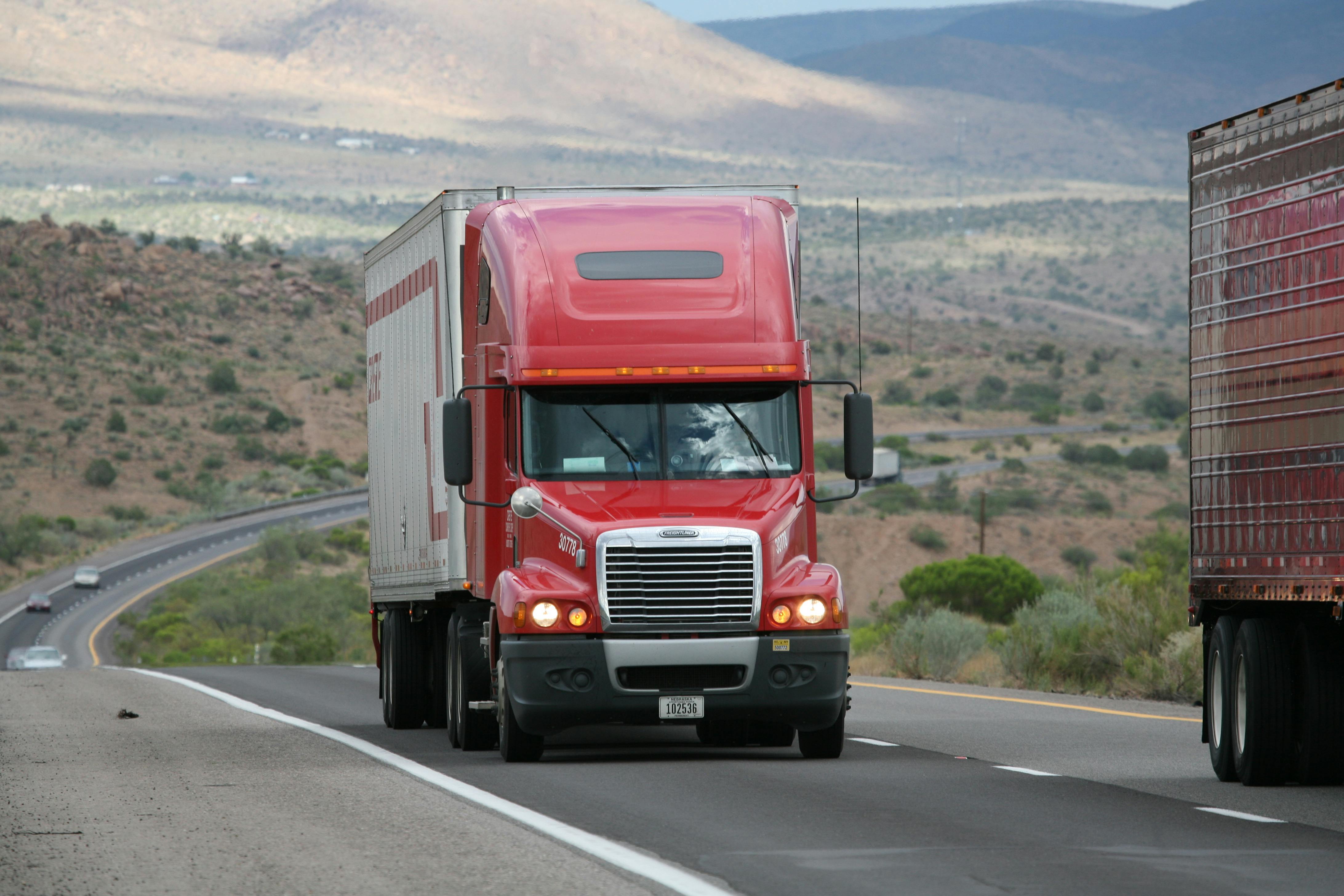
A Class A CDL authorizes you to operate any combination of vehicles where the gross combination weight rating (GCWR) exceeds 26,001 pounds, and the towed vehicle — the trailer — weighs more than 10,000 pounds.
In plain language: Class A is the license you need to drive an 18-wheeler, a tractor-trailer, or any rig where a heavy trailer is attached to a heavy truck. It is the most versatile commercial license available, and a Class A holder can legally drive any vehicle covered by Class B or Class C as well.
Combination vehicles over 26,001 lbs GCWR with trailer over 10,000 lbs
- Tractor-trailers (18-wheelers, semi-trucks, big rigs)
- Flatbed trailers pulled by a semi
- Tanker trucks pulling a tanker trailer
- Double and triple trailer combinations (with T endorsement)
- Livestock haulers and refrigerated trailers
- All Class B and Class C vehicles
What is a Class B CDL?
A Class B CDL authorizes you to operate a single vehicle with a gross vehicle weight rating (GVWR) over 26,001 pounds, or to tow a trailer that weighs 10,000 pounds or less.
The key distinction is that word "single." No heavy trailer attached. A Class B driver operates the entire load in one connected unit — the truck itself carries everything. Think of a city bus, a garbage truck, a large box truck, or a concrete mixer. All of those are Class B vehicles.
Single vehicles over 26,001 lbs GVWR — no heavy trailer attached
- Straight trucks and large box trucks
- City transit buses and coach buses
- School buses (with school bus endorsement)
- Dump trucks and garbage trucks
- Concrete mixer trucks
- Large delivery trucks used by courier services
- All Class C vehicles
Class A vs Class B: side-by-side comparison
Here is every meaningful difference between the two licenses in one place.
| Category | Class A CDL | Class B CDL |
|---|---|---|
| Weight rule | GCWR over 26,001 lbs with trailer over 10,000 lbs | GVWR over 26,001 lbs, trailer 10,000 lbs or less |
| Vehicle type | Combination vehicles — tractor plus trailer | Single heavy vehicles — no heavy trailer |
| Typical vehicles | 18-wheelers, tractor-trailers, doubles, triples | Buses, straight trucks, dump trucks, box trucks |
| Knowledge tests | General knowledge + combination vehicles + endorsements | General knowledge + endorsements only |
| Skills test | Pre-trip + basic control + road test with tractor-trailer | Pre-trip + basic control + road test with straight truck |
| Training length | 3–4 weeks full-time | 2–3 weeks full-time |
| Training cost | $3,000–$10,000 | $1,500–$5,000 |
| Median salary | $60,000–$70,000/year | $45,000–$55,000/year |
| Job options | Very wide — long haul, regional, local, specialized | Mostly local — transit, delivery, construction |
| Lifestyle | Often OTR (over-the-road) — away from home | Usually local — home most nights |
| Endorsements available | H, N, T, X, P, S — all endorsements | H, N, P, S — most endorsements except doubles/triples |
| Covers lower classes? | Yes — covers all Class B and Class C vehicles | Yes — covers all Class C vehicles |
The knowledge test difference — what Class A adds
This is the section most comparison articles skip entirely. The knowledge test for Class A and Class B are not identical. Class A requires an extra written test section that Class B does not.
Both classes require the CDL General Knowledge test — 50 questions covering safe driving, vehicle inspection, cargo handling, and driving emergencies. If you want air brakes on either class, you take the Air Brakes knowledge test separately.
What Class A adds on top of that is the Combination Vehicles knowledge test — a separate written section that covers:
- How coupling and uncoupling a trailer works
- How to inspect the fifth wheel and kingpin connection
- Trailer brake systems and how they interact with the tractor
- Rearward amplification and trailer sway on doubles and triples
- Rollover risk on combination vehicles in curves
- Off-tracking — how a trailer's rear wheels cut inside the tractor's path on turns
This extra test is not particularly difficult, but it covers concepts that are specific to combination vehicles. If you study only the general knowledge section and show up expecting a Class A permit, you will have a gap in your preparation.
Salary: how much more does Class A pay?
Class A drivers earn more on average, but the gap is not as dramatic as CDL schools sometimes suggest. The salary difference depends heavily on the type of route and employer.
per year — experienced OTR drivers earn $80,000–$100,000+
per year — local city bus and transit drivers average $45,000–$58,000
The $15,000 average gap between the two classes has a straightforward explanation. Class A drivers are often away from home for days or weeks on over-the-road routes. That time away from home is compensated with higher pay. Class B drivers typically run local routes and are home every night — the tradeoff is a lower base salary.
| Job Type | CDL Class | Typical Annual Pay | Home Time |
|---|---|---|---|
| OTR tractor-trailer driver | Class A | $65,000–$90,000 | Home weekly or biweekly |
| Regional trucking | Class A | $55,000–$75,000 | Home most weekends |
| Hazmat/tanker specialist | Class A | $70,000–$100,000+ | Varies by route |
| Local delivery (Class A) | Class A | $50,000–$65,000 | Home nightly |
| Transit/city bus driver | Class B | $45,000–$58,000 | Home nightly |
| School bus driver | Class B | $35,000–$48,000 | Home daily |
| Dump truck / construction | Class B | $45,000–$60,000 | Home nightly |
| Delivery truck driver | Class B | $48,000–$65,000 | Home nightly |
One thing worth noting: a Class A driver doing local delivery earns similar pay to a Class B driver doing the same type of route. The pay advantage of Class A comes from long-haul and specialized routes — not from the license itself.
Jobs: what each class actually opens up
The job market for Class A is broader, but Class B is not a dead end. Both licenses open stable, well-paying careers with strong demand. The difference is in what types of work are available to each.
Class A CDL Jobs
- Long-haul OTR trucker
- Regional freight driver
- Hazmat/chemical tanker driver
- Flatbed specialist
- Refrigerated (reefer) driver
- Doubles and triples operator
- Auto transport driver
- Livestock hauler
- Local delivery (food service, retail)
Class B CDL Jobs
- City transit bus driver
- School bus driver
- Coach and charter bus driver
- Garbage and recycling truck driver
- Concrete mixer driver
- Dump truck driver
- Large delivery truck driver
- Street sweeper operator
- Airport shuttle driver
One pattern worth noting: most Class B jobs are in municipal services, public transit, and local construction. These jobs tend to offer union contracts, pension benefits, and predictable schedules that many Class A OTR positions do not. If stability and home time matter more than maximum earning potential, Class B jobs often win that comparison.
Can you upgrade from Class B to Class A?
Yes — and this is an important option that most comparison articles do not mention. If you start with a Class B CDL and later want to upgrade to Class A, you do not start from scratch.
To upgrade from Class B to Class A you need to:
- Pass the Combination Vehicles knowledge test at your state DMV
- Complete ELDT training on a combination vehicle from an FMCSA-registered provider
- Pass the Class A skills test in a tractor-trailer
You do not need to retake the general knowledge test, and any endorsements you already hold stay on your license. The upgrade path typically takes 2 to 3 weeks of additional training.
This is useful to know if your current job only requires Class B but you want to keep your options open. Getting Class B first and upgrading later is a legitimate strategy — especially if your employer will pay for the upgrade training after you have proven yourself on the job.
Upgrade path tip: Some large carriers — UPS, FedEx, Amazon DSP — hire drivers with Class B CDLs for delivery routes and then sponsor the Class A upgrade. If cost is a barrier to Class A training, starting at Class B and letting an employer sponsor the upgrade is a real option worth researching.
Which one should you get?
This is the question everyone arrives at, and most articles answer it vaguely. Here is a direct framework based on your actual situation.
Choose Class A if you...
- Want to drive tractor-trailers or 18-wheelers
- Want the highest earning potential in trucking
- Are comfortable with time away from home
- Want the most flexibility across job types
- Plan to get hazmat or tanker endorsements for specialized work
- Want to eventually go owner-operator
Choose Class B if you...
- Want to be home every night
- Want to drive buses or work in transit
- Want to work in local construction or municipal services
- Have a lower training budget
- Want to get working faster and potentially upgrade later
- Prefer predictable hours and union-backed benefits
What about Class C?
Class C covers vehicles under 26,001 lbs that either transport 16 or more passengers, or carry hazardous materials that require placarding. It is a narrower license than B or A and is typically required for passenger vans, small para-transit vehicles, and certain hazmat delivery roles.
Most people asking about Class A vs Class B are not looking at Class C, but it is worth knowing that both Class A and Class B automatically cover everything in Class C — so if you have either of the two main licenses, Class C is already included.
Preparing for the CDL knowledge test
Whichever class you choose, the path starts the same way: study the FMCSA CDL manual, pass the written knowledge test at your state DMV, and get your Commercial Learner Permit. Only then can you start behind-the-wheel training.
The general knowledge test is the same for both Class A and Class B. Class A adds the combination vehicles section on top. If you are going Class A, study both sections before your DMV visit so you can pass both tests in one trip and get your CLP without delay.
Air brakes is another section worth studying before school. Most Class A and many Class B vehicles have air brake systems. If you do not pass the air brakes knowledge test, your license comes with an air brakes restriction — meaning you cannot legally drive any vehicle with air brakes until you remove it. That restriction costs you job opportunities from day one.
Study smart before your DMV visit. The PassMyCDL free lesson library covers the general knowledge section, air brakes, hazmat, and tanker endorsements — all sourced from the FMCSA manual. Use it before your knowledge test so you walk in prepared instead of guessing.
Class A vs Class B CDL Questions
What is the difference between a Class A and Class B CDL?
A Class A CDL lets you drive combination vehicles — a tractor plus a trailer — where the trailer weighs over 10,000 lbs and the total GCWR exceeds 26,001 lbs. A Class B CDL lets you drive a single heavy vehicle over 26,001 lbs GVWR without a heavy trailer. Class A is more versatile and opens more job options including long-haul trucking.
Is Class A harder to get than Class B?
Yes. Class A requires an additional knowledge test on combination vehicles and the skills test uses a tractor-trailer, which is more complex to back and maneuver than a straight truck. Training takes 3 to 4 weeks full-time versus 2 to 3 weeks for Class B.
Can a Class A CDL holder drive Class B vehicles?
Yes. A Class A CDL covers everything a Class B and Class C covers. You can drive straight trucks, buses, and all other Class B vehicles with a Class A license without any additional testing.
Which CDL class pays more?
Class A drivers earn more on average — around $60,000 to $70,000 per year versus $45,000 to $55,000 for Class B. However, Class A's higher pay often comes from OTR routes that require time away from home. Class B local jobs may pay less but offer better work-life balance for many drivers.
Can you upgrade from Class B to Class A?
Yes. You pass the combination vehicles knowledge test, complete ELDT training on a combination vehicle, and pass the Class A skills test. You keep all existing endorsements and do not retake the general knowledge test.
What vehicles can you drive with a Class B CDL?
With a Class B CDL you can drive straight trucks, box trucks, city buses, school buses, dump trucks, garbage trucks, concrete mixers, and large delivery vehicles — all over 26,001 lbs GVWR without a heavy trailer attached.
Start studying for your CDL knowledge test
Whether you are going Class A or Class B, the general knowledge test is the first hurdle. PassMyCDL's free lessons cover every section of the FMCSA manual — including combination vehicles, air brakes, and endorsements — so you pass on the first attempt.
Start 48 Free Lessons →